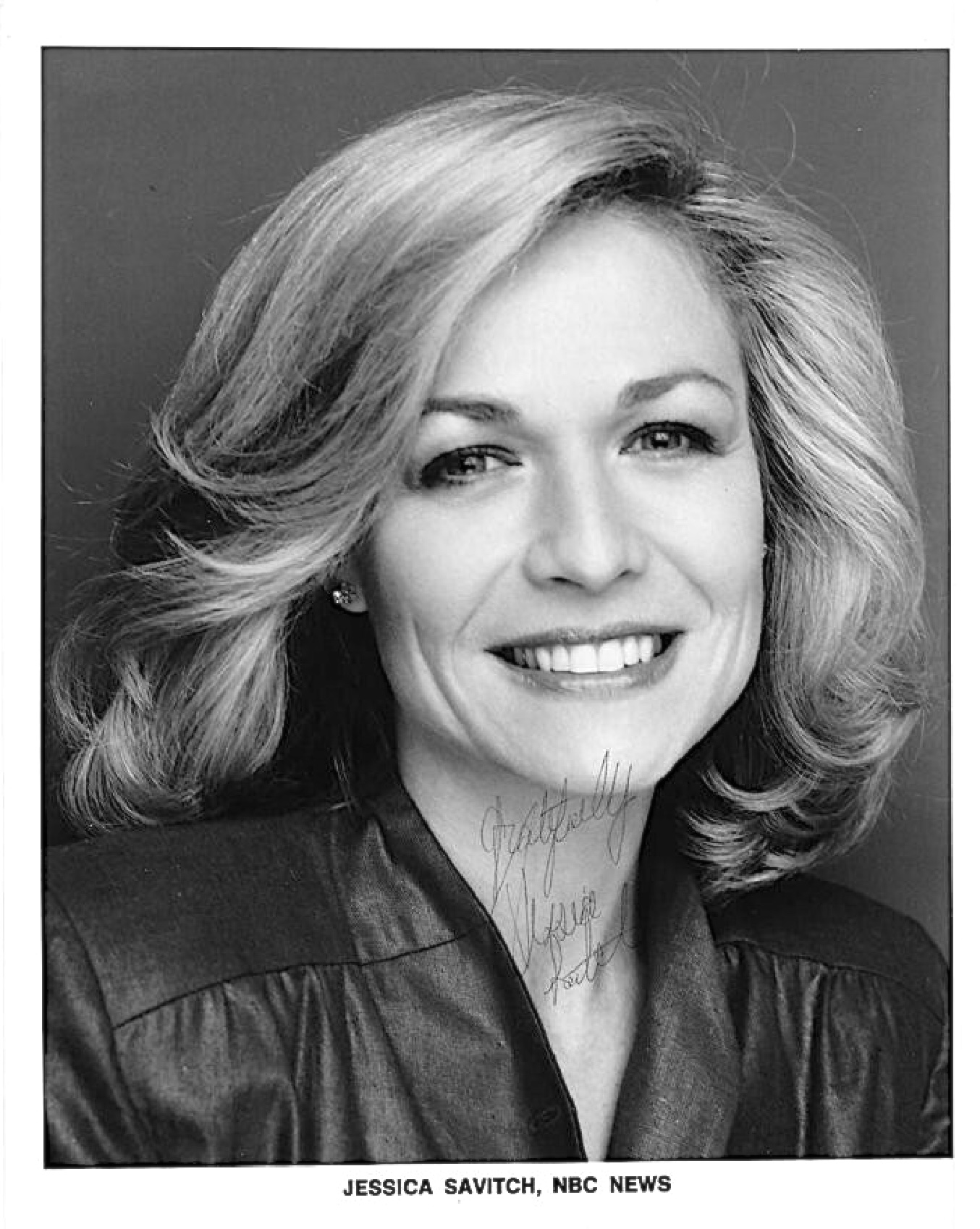
Jessica Savitch
Feb 1, 1947 - Oct 23, 1983
Career driven, talented, barrier-breaking yet anguished… this website is dedicated in fond memory of television’s “Almost Golden” journalist and anchorwoman, Jessica Savitch. May her memory be a blessing.
Feb 1, 1947 - Oct 23, 1983
Career driven, talented, barrier-breaking yet anguished… this website is dedicated in fond memory of television’s “Almost Golden” journalist and anchorwoman, Jessica Savitch. May her memory be a blessing.
Jessica Beth Savitch was born on February 1, 1947, in Wilmington, Delaware and raised in Kennett Square, Pennsylvania. She was the eldest of two daughters of David “Buddy” Savitch, who ran a clothing store, and Florence Savitch, a registered nurse.
David Savitch suffered from nephritis, an incurable kidney disease, and died in 1959 when Jessica was just twelve. In her autobiography Anchorwoman, she wrote that his death “shattered my life” and left her feeling like Dorothy in The Wizard of Oz — swept away by a tornado, everything familiar gone at once. Following his death, her mother moved the family from Kennett Square to Margate, New Jersey, to be near her own parents. Florence resumed her nursing career, which she had set aside during her marriage.
Jessica attended Atlantic City High School, which she described as a jarring adjustment from the “tidy homogeneity” of her small Pennsylvania town to a large, ethnically and economically diverse “inner-city school.”
In her sophomore year of high school, Jessica met Steve Berger, a fellow student who worked at WOND, a radio station in Pleasantville, New Jersey (“The Jukebox in the Swamp”), hosting a teen program called Teenville. He brought her to the station, where program director Mike Elliott had her record a show introduction. Hearing her own voice played back at her kitchen table, she later wrote, was the moment “my destiny was fixed.” WOND soon hired her as an on-air host, and she became, by one account, the first regularly scheduled on-air woman in the region.
Savitch majored in communications (also described as “Television-Radio”) at Ithaca College in upstate New York, graduating in 1968. She worked as an announcer for the college’s television station, WICB, and as a disc jockey — known as “Honeybee” — at WBBF-AM in Rochester.
She also worked as a model and on-camera commercial announcer to help fund her education, and continued returning to Ithaca after graduation to teach a short course on television news.
After graduating in 1968, Savitch was hired in 1969 as an administrative assistant at WCBS, CBS Radio’s flagship New York news station, where she also did freelance production work. Unable to get hired there as an on-air reporter for lack of experience, she sent her audition tape to stations nationwide — by one account, to every city large enough to support all three networks — and received fewer than a dozen responses and only one job interview.
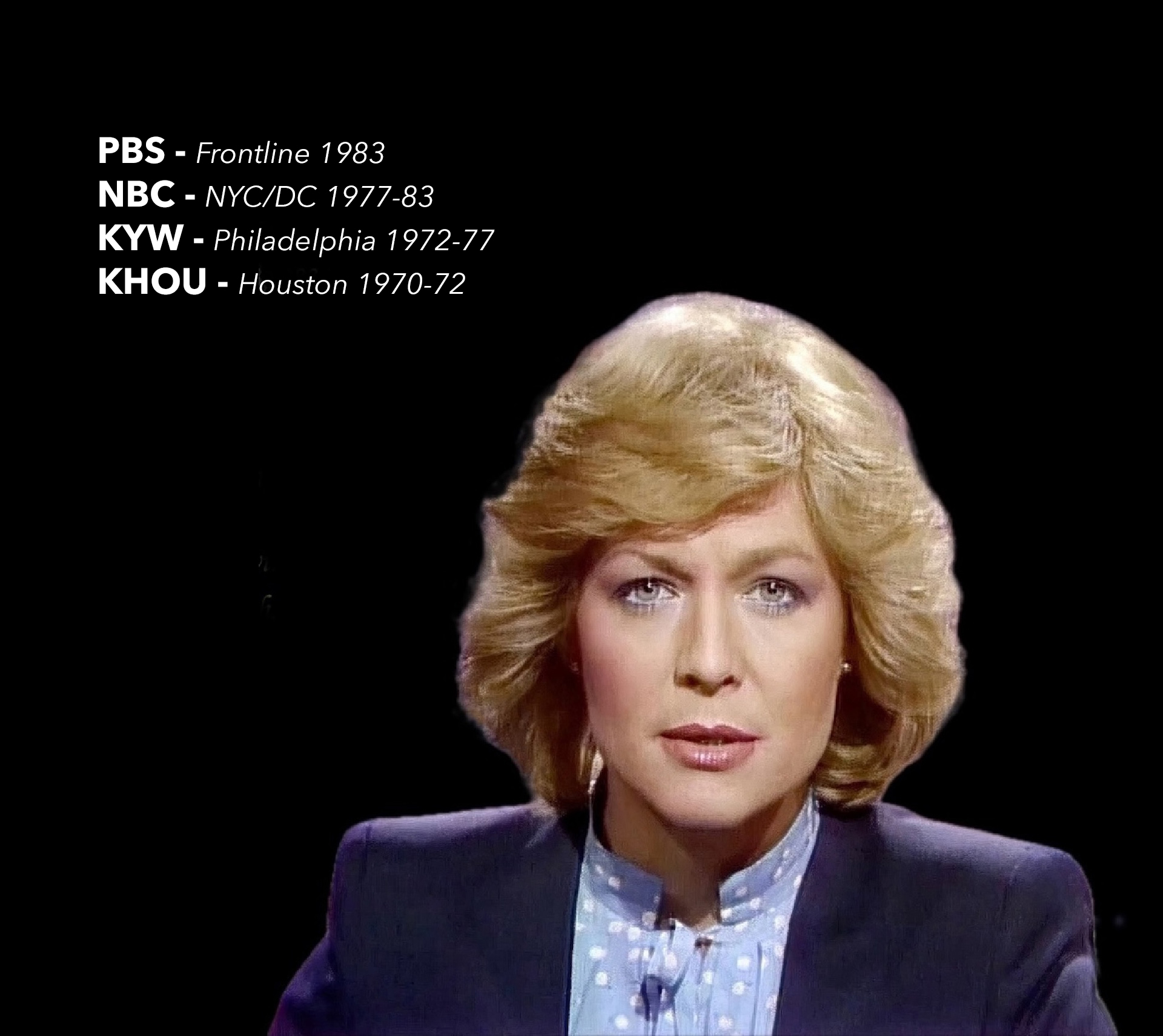
She was hired by KHOU-TV in Houston as the station’s first female reporter. News director Dick John said he was drawn to her ambition and her writing and speaking skills. She was the only woman in the newsroom besides a secretary, and colleagues helped her learn the job. Because KHOU was non-union, she was able to take part in production as well as on-camera reporting. A few months later she won a weekend anchor slot, making her, by multiple sources, the first woman to anchor a newscast in the South. Her nationally picked-up coverage of a train derailment and fire, shown on the CBS Evening News with Walter Cronkite, helped establish her reputation; narrowly avoiding serious injury while reporting on the incident. She was succeeded at KHOU by Linda Ellerbee.
In November 1972, Savitch moved to KYW-TV in Philadelphia (then an NBC affiliate) as a general-assignment reporter and weekend anchor, signing a five-year ironclad contract. Unlike Houston, KYW was a union station, limiting her to on-camera work. When she was initially unable to get a weeknight anchor shift, she tried to break her contract for a CBS offer. KYW refused to release her but raised her salary and promoted her to weeknight anchor, and soon was added to the noon broadcast as well. She became part of a popular anchor team with Mort Crim and Vince Leonard on the 11 p.m. news. KYW’s ratings soon began seriously challenging ABC affiliate WPVI’s long-dominant “Action News.” Jessica became a genuine local celebrity, sometimes drawing crowds on the street.
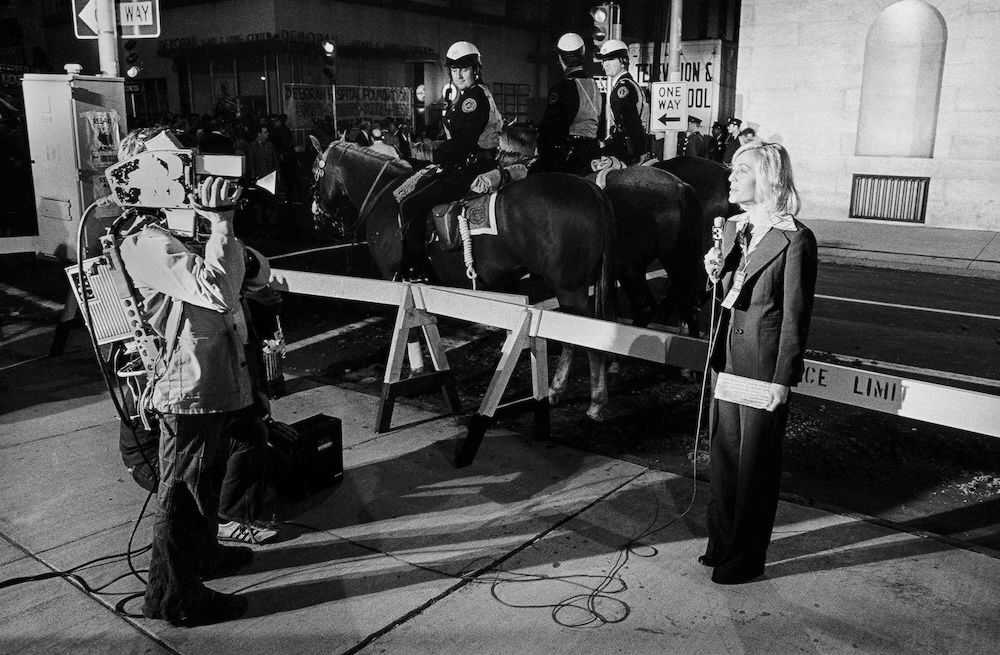
During the televised presidential debate between Gerald Ford and Jimmy Carter held in Philadelphia, an audio failure knocked out sound for 27 minutes. Savitch was one of three KYW reporters who filled the dead air live. A KYW producer later said she was “very good on her feet, could think fast, ask the right questions, and genuinely listen to answers.” That moment first drew national network attention to her.
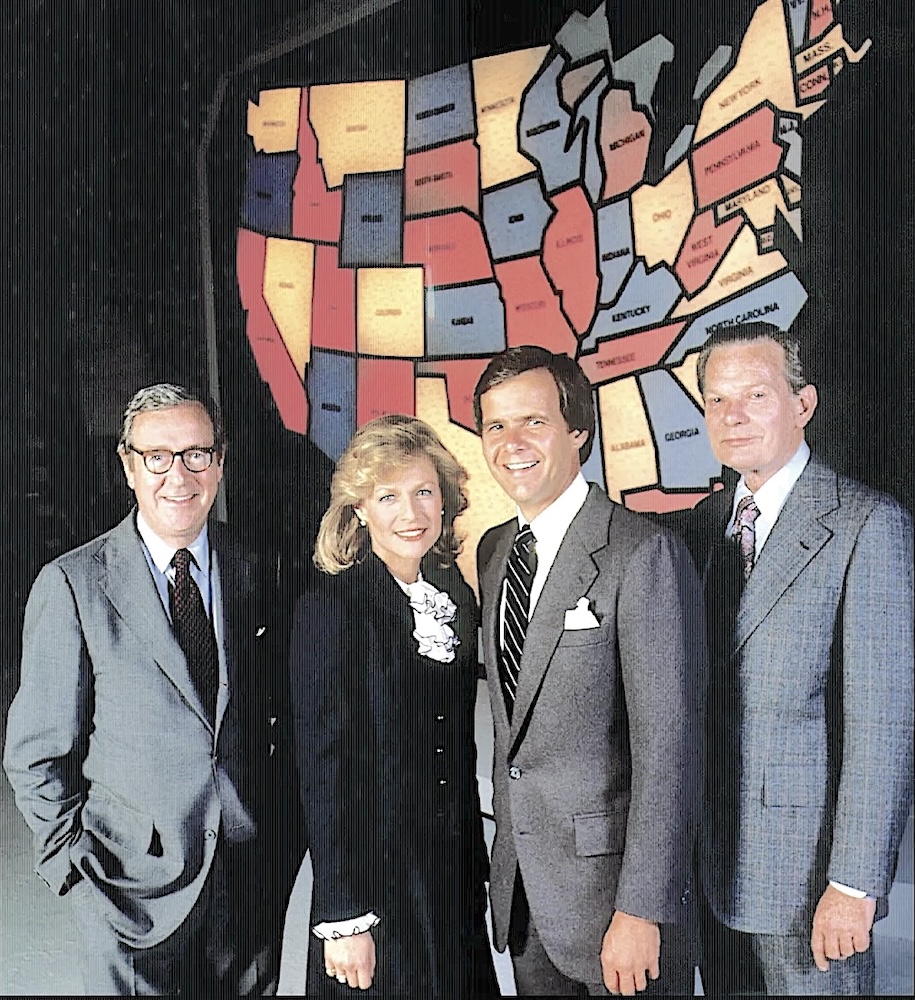
Savitch left KYW in August 1977 and joined NBC that September on a three-year contract based in Washington, D.C., covering the U.S. Senate and anchoring weekend editions of NBC Nightly News. She was NBC’s second woman to anchor a national weekend newscast. Catherine Mackin had anchored the Sunday broadcast beginning in December 1976 before leaving for ABC News the following year. Savitch later became the first woman to anchor the weeknight edition of NBC Nightly News, periodically substituting for regular anchors John Chancellor and David Brinkley.
Her NBC roles expanded over time: panelist and regular guest on Meet the Press, contributor to news magazines Prime Time Saturday and Prime Time Sunday (named co-anchor of the latter in 1979), and anchor of NBC News Digest — one-minute live prime-time news updates that drew a notably high number of viewers. Affiliates reportedly agreed to carry the segments largely because she was presenting them. She also occasionally substituted as host for Today and The Tomorrow Show (the latter hosted by Tom Snyder, a former KYW colleague) and as a U.S. Senate correspondent.
A 1982 TV Guide poll ranked her the fourth most trusted news anchor in the country, ahead of a number of well-known male anchors.
Colleagues praised her composed, improvised narration of graphic film footage of the Jonestown massacre and the killing of Congressman Leo Ryan. She had to narrate live while viewing the disturbing footage for the first time, with no chance to preview beforehand.
In January 1983, Savitch became the founding host of PBS’s new documentary series Frontline, a role she held until her death that October. Judy Woodruff succeeded her as host.
Savitch was married twice, neither marriage producing children.
She wrote a bestselling autobiography, Anchorwoman (G.P. Putnam’s Sons, 1982), covering her rise through local and national news.
By 1983, NBC was elevating other female anchors, and in June 1983 Connie Chung replaced Savitch in the Saturday evening anchor chair, also taking the Early Today slot Savitch had earlier declined. From then on, Savitch’s main remaining NBC appearances were the brief live nightly News Digest segments.
On October 3, 1983, during a News Digest segment, Savitch’s delivery was noticeably impaired — slurred and skipped words, and ad-libbing from her script. She performed a later segment that same evening without incident. She attributed the problem at the time to a teleprompter malfunction; her agent instead cited pain medication she was taking following facial reconstructive surgery after a boating accident.
The incident fueled speculation of cocaine use. Some colleagues said they’d seen evidence, while others were skeptical. NBC correspondent Linda Ellerbee has said she urged network management to intervene, telling them “This woman is in trouble.” Ellerbee said colleagues attempted to reach out to Savitch after management failed to act, but she died before anything further could be done.
Accounts differ on how career-ending the October 3rd incident actually was. Biographer Gwenda Blair wrote that it effectively ended her network career, while a People magazine article published after her death reported that her NBC contract had in fact been renewed (for one year rather than the usual three), that she was slated to return as a substitute Sunday anchor in January 1984, and that another season of PBS Frontline was planned.
Savitch died on October 23, 1983, at age 36, in New Hope, Pennsylvania alongside Martin Fischbein, vice president and assistant general manager of the New York Post, by drowning after the car, driven by Fischbein, overturned in the Delaware Canal. New York Times article from October 25, 1983.
Savitch’s family and a group of friends sued the New York Post, Fischbein’s estate, Chez Odette, and the Commonwealth of Pennsylvania over her death. The case settled in 1988 for $8 million, most paid by the Post. Part of the settlement funded scholarships for women pursuing broadcasting/journalism careers at Ithaca College and other schools.
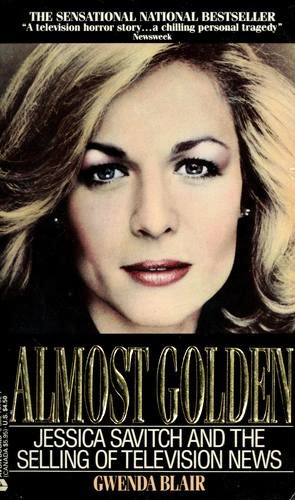
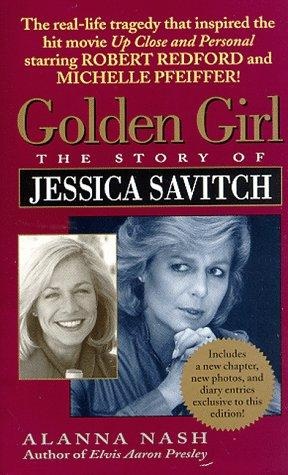
Two posthumous biographies were written about her: Gwenda Blair’s Almost Golden: Jessica Savitch and the Selling of Television News (Simon & Schuster, 1988) and Alanna Nash’s Golden Girl: The Story of Jessica Savitch (Dutton, 1988). Her family and friends have disputed portions of both books relating to her reporting skills and personal life.
More than forty years after her death, Jessica Savitch is still part of life at her alma mater. Ithaca College’s Roy H. Park School of Communications runs the Jessica Savitch Endowed Programs, funded by an endowment created in her honor.
Learn more: The Jessica Savitch Endowed Programs at Ithaca College
We have attempted to present Jessica's story as she might have herself, had her brilliant light not been so tragically extinguished on that rainy Sunday night so many years ago in the quaint Pennsylvania borough of New Hope. Through the lens of time we have come to appreciate that all was not peaches and cream in this dynamic young woman's brief time in the public eye. Beset by sexist roadblocks at the workplace and crippling tragedies in her private life, she managed to insulate that trauma from her public persona.
Readers familiar with the more difficult chapters of her life will recognize what is being gestured at here, while those encountering Jessica for the first time are encouraged to explore further on their own. This web site is not an attempt to skirt any darkness, but rather a choice to allow her groundbreaking professional legacy to stand on its own merit.
Jessica Savitch blazed an inspirational trail that many others have followed. She deserves a place of reverence for her fearless determination, skillful delivery and pioneering enthusiasm that continues to shine long after her passing.

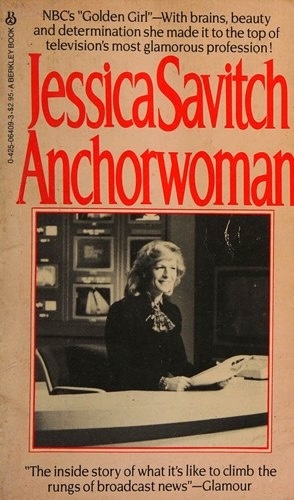
Anchorwoman - Jessica Savitch
Almost Golden - Gwenda Blair
Golden Girl - Alanna Nash